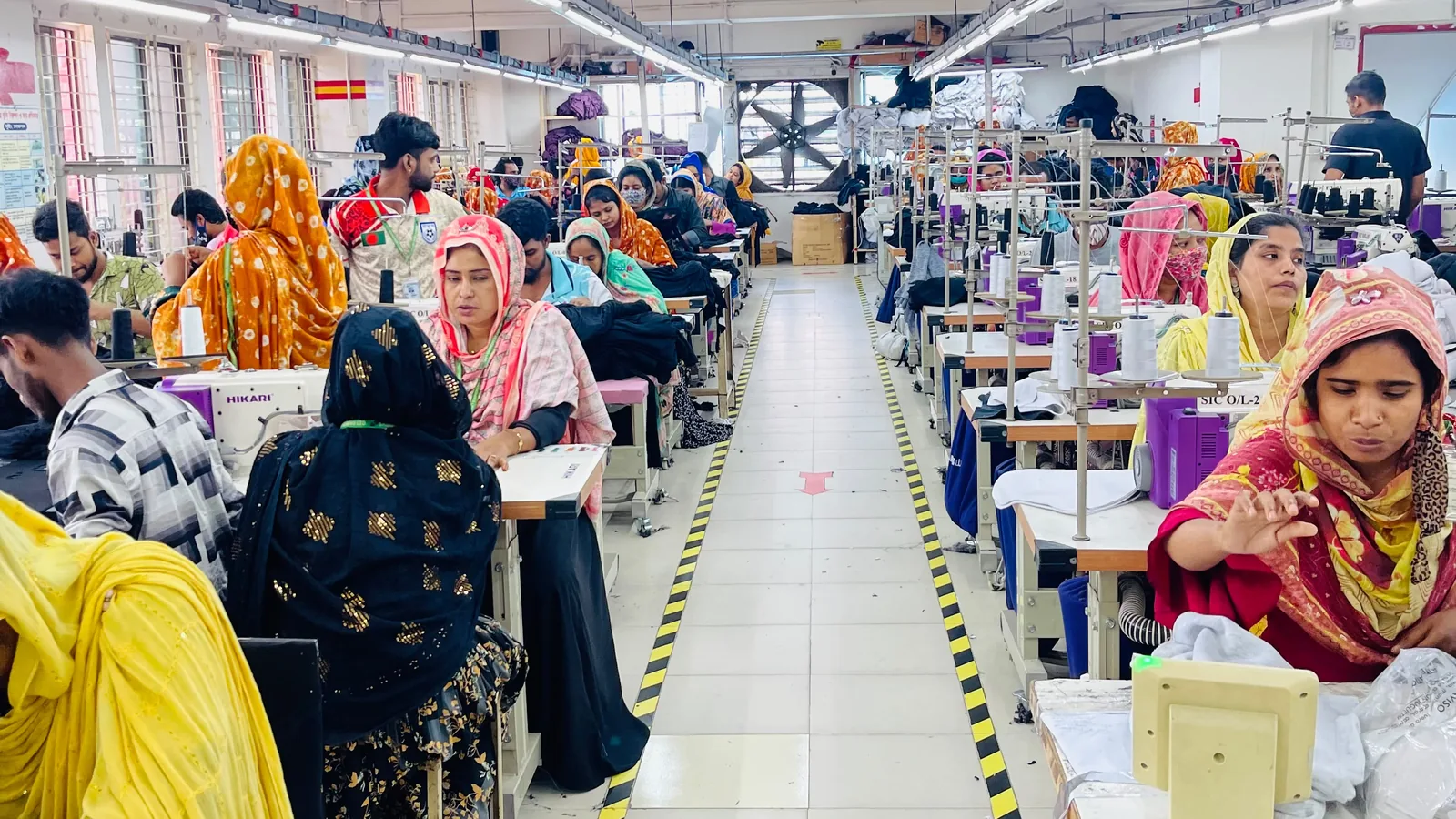
Independent Quality Inspection on the Production Floor
Zero-Tolerance Quality Philosophy · Independent Auditing

How Quality Is Controlled: Independent 8-Gate Inspection Architecture

At Sabah Designers, quality is not a slogan—it is a verifiable, multi-checkpoint engineering protocol. Our Quality Assurance Department operates completely independently of manufacturing floor production quotas, reporting directly to executive directors to guarantee uncompromised AQL 1.5 / 2.5 compliance.

8 Gates
Mandatory Inspection Points
AQL 1.5 / 2.5
ISO 2859-1 Level II Normal
100% Needle Free
Hashima Dual Conveyor Scanning
In-House Lab
Physical & Chemical Testing
Architecture

The 8 Mandatory Quality Control Inspections

Systematic verification from raw material to export container loading

01

Fabric Inspection (Greige & Finished Rolls)

ASTM D5430 4-Point System

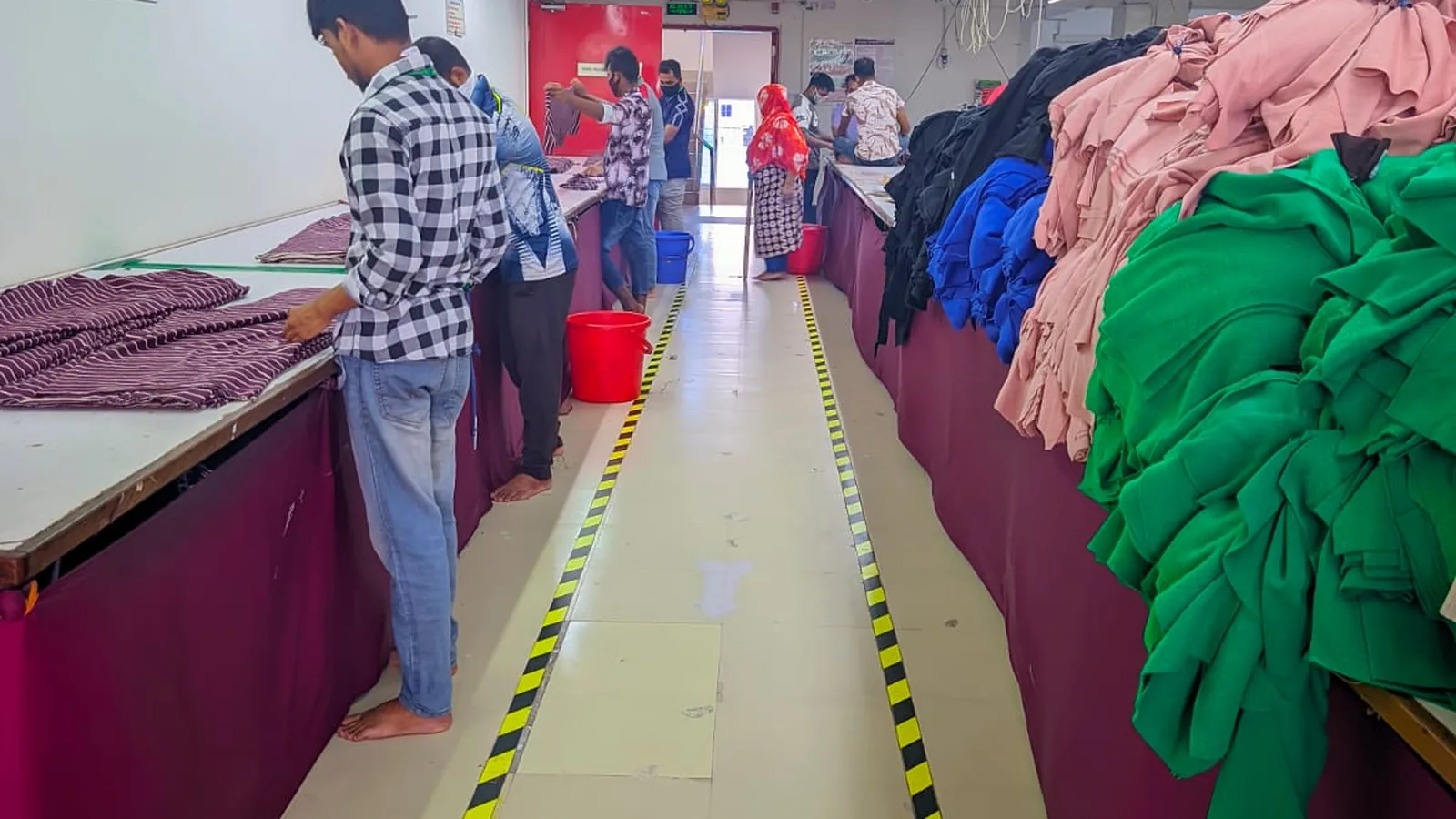
Every batch of incoming fabric undergoes rigorous roll-by-roll inspection before authorization for spreading or cutting. We inspect at least 10% of total roll yardage using backlit motorized inspection frames, recording defect penalty points per 100 square yards according to the international 4-point standard.

  • Defect Point Auditing: Penalties assessed for slubs, holes, knitting knots, foreign yarn, oil spots, and color fly.
  • GSM & Weight Verification: Circular GSM cutters and digital analytical balances confirm weight across roll center and edges.
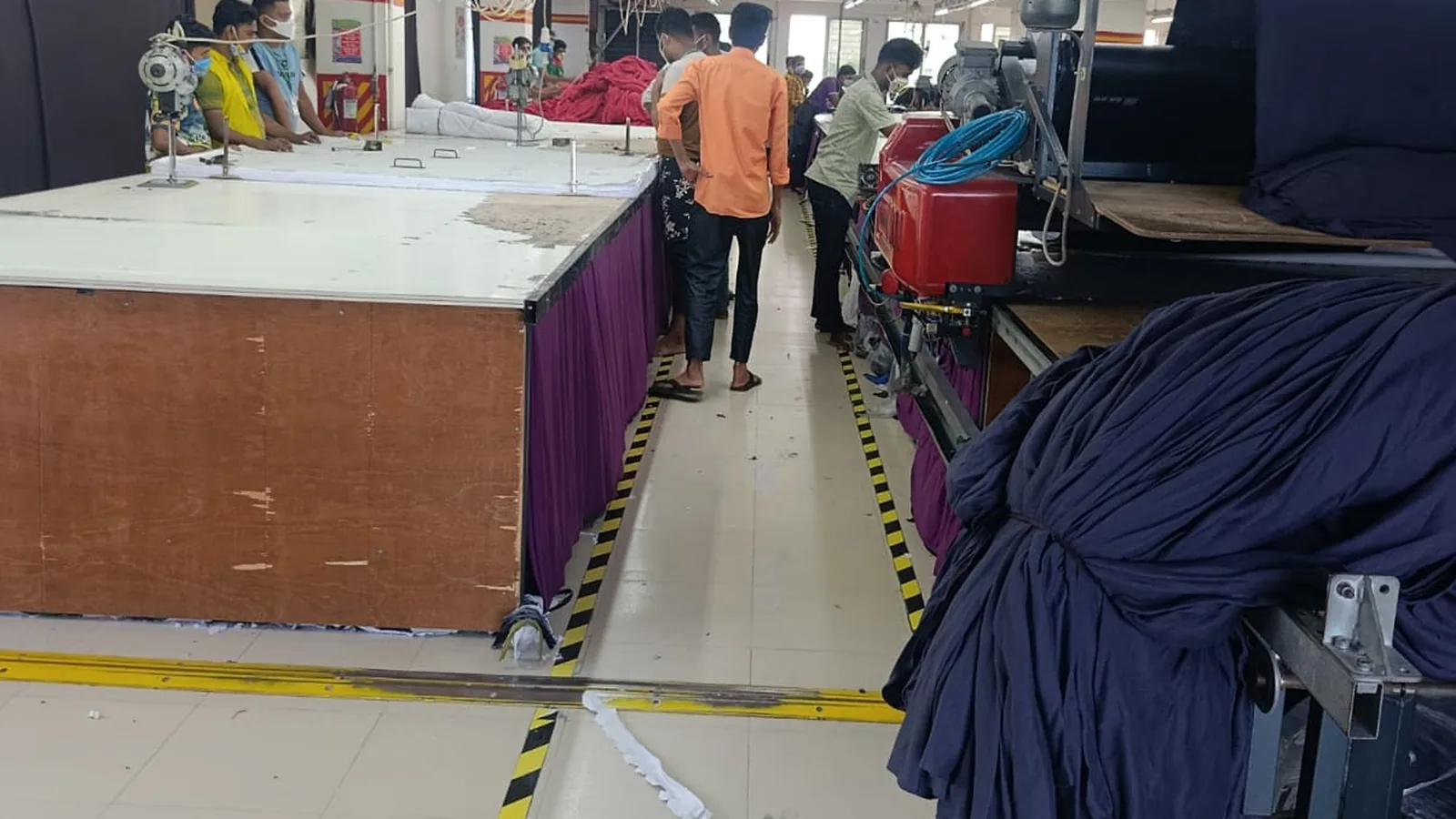
Fabric Roll Inspection and Relaxation Floor
Fabric Relaxation & Audit Bay — 24-hour tensionless relaxation and 4-point defect logging before cutting.
02

Measurement Checks (POM Tolerance Auditing)

Strict Tolerance Tracking

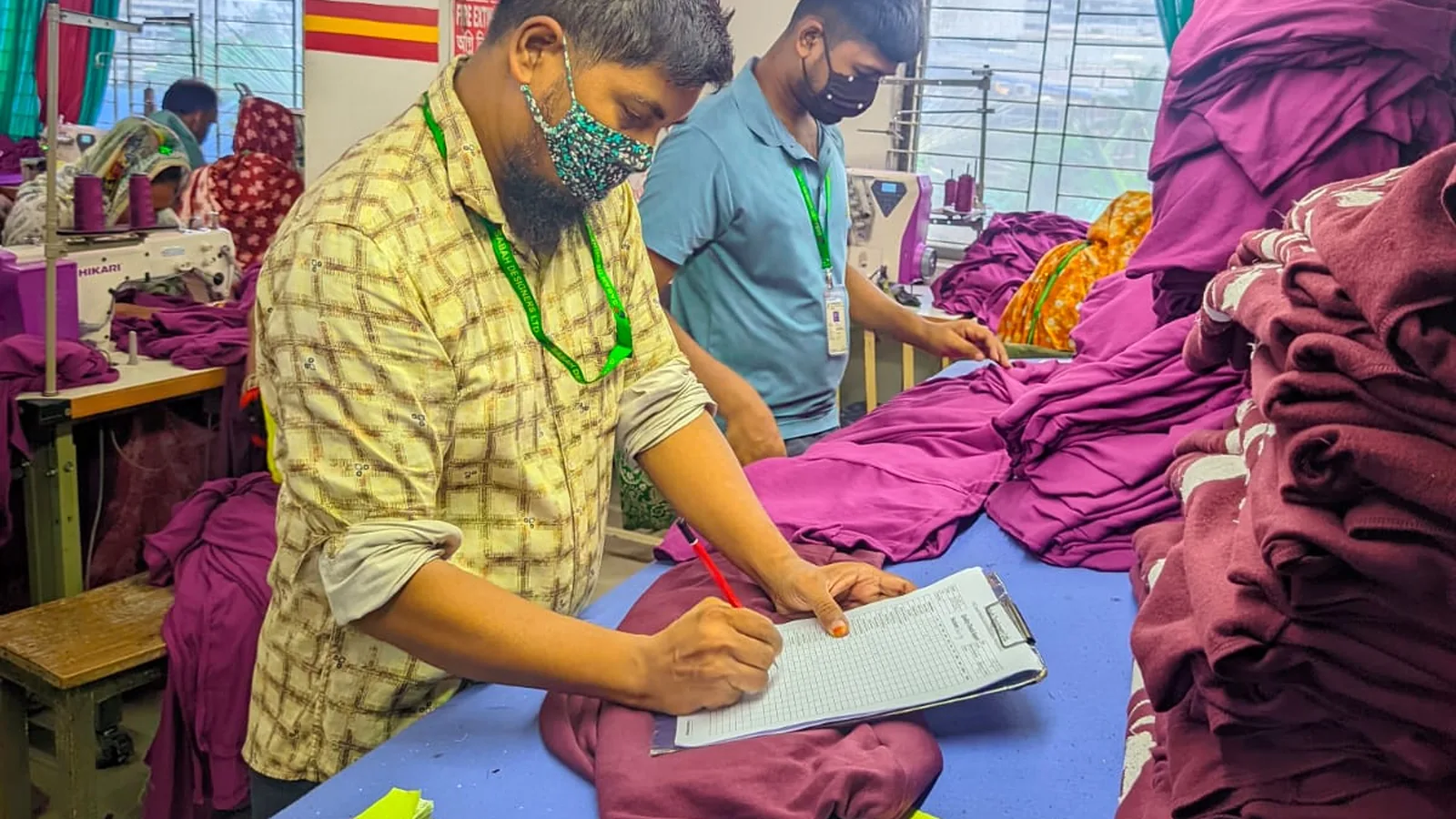
Fit consistency across production is non-negotiable. Our measurement inspectors audit assembled garments against buyer-approved tech pack Points of Measure (POM) using steel precision tapes on calibrated measuring tables illuminated under 1000+ lux shadowless lighting.

  • Critical POM Verification: Chest width, total body length, shoulder slope, sleeve length, collar circumference, and armhole curve.
  • Tolerance Enforcement: Strict adherence to ±0.5cm for tops and ±1.0cm for heavy fleece bottoms.
Precision Garment Measurement Audit
Precision Measurement Table — Checking critical body dimensions against buyer POM grade sheets under daylight lamps.
03

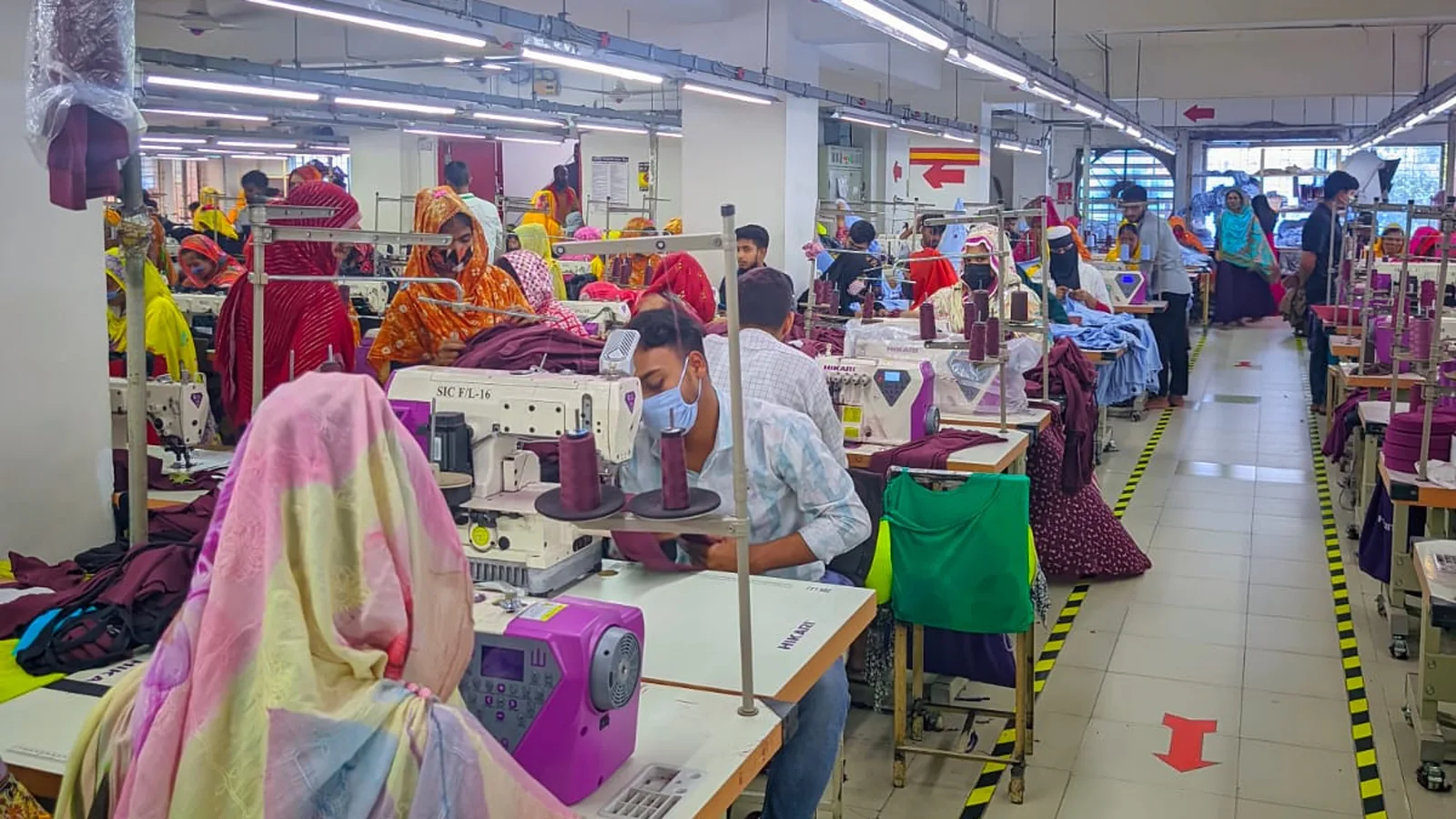
Inline Inspection (Sewing Line Traffic Light System)

Live Traffic Light Status

To catch defects at the source rather than at the end of the line, roving Quality Assurance chiefs continuously monitor our 18 modular sewing lines. Each operator station features a visible Traffic Light Card (Green = Zero Defects, Yellow = Minor Warning, Red = Line Halt for Mechanic/Operator Retraining).

  • 7-Piece Random Hourly Audit: Inspectors pull 7 consecutive pieces per workstation every hour to verify operation conformity.
  • Immediate Defect Correction: If two consecutive defects occur, the station is halted immediately for machine adjustment.
Sewing Line with Active In-Line Quality Inspectors
Sewing Floor In-Line Monitoring — Dedicated QA chiefs conduct roving workstation checks across all 18 modular lines.
04

Construction Inspection (Structural Seam & Stitch Integrity)

SPI 10–12 Density Standard

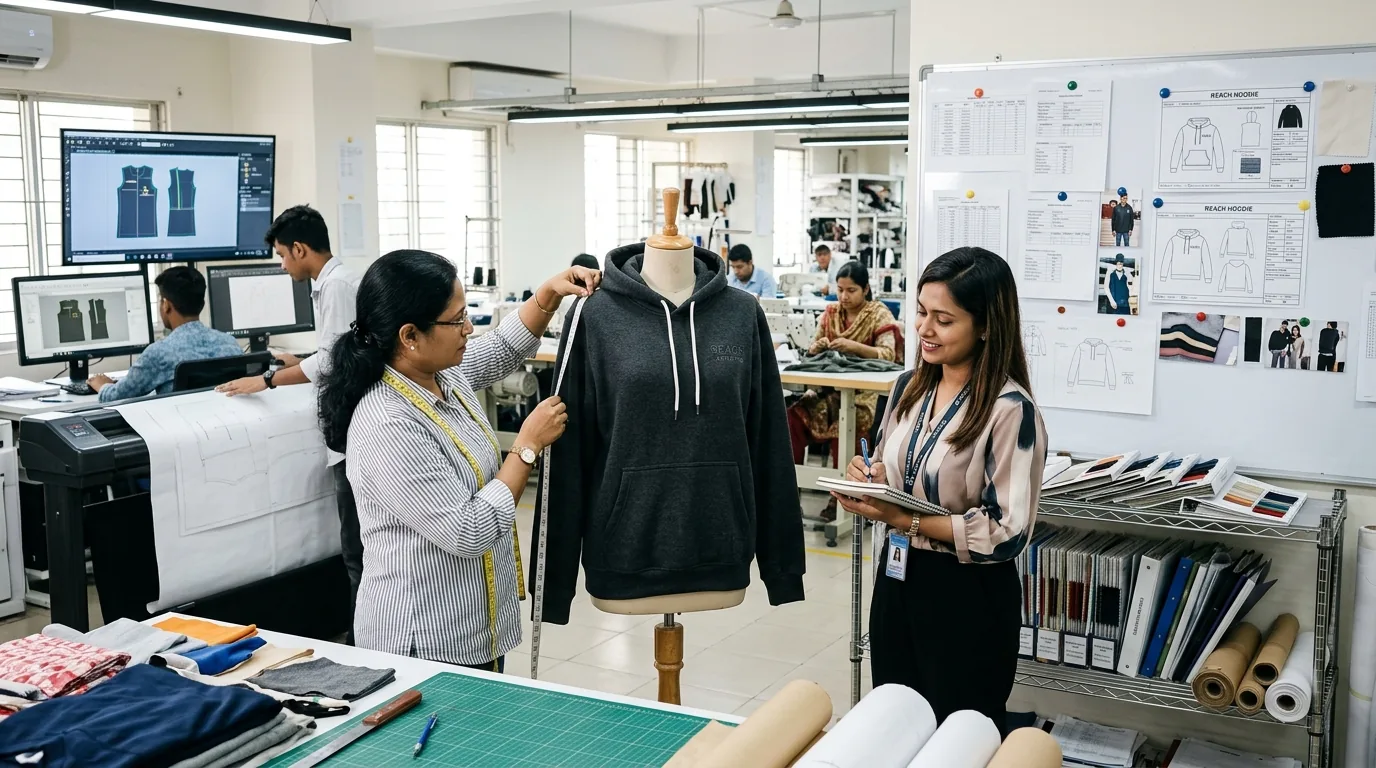
A garment is only as strong as its seams. Construction inspection examines the structural integrity of sewing mechanics: stitch per inch (SPI) consistency, thread tension balance, seam elasticity under elongation, and bar-tack reinforcement at high-stress wear points.

  • SPI Density Verification: 10 to 12 stitches per inch strictly calibrated to prevent seam puckering or stitch unraveling.
  • Seam Stretch & Recovery: Flatlock, overlock, and chainstitch seams tested under manual elongation for thread breakage.
Construction and Pattern Master Benchmarking
Technical Pattern Benchmarking — Master tailors establish construction standards and stitch elasticity parameters.
05

Print & Embroidery Inspection (Adhesion, Fastness & Clarity)

Cross-Hatch & Wash Tested

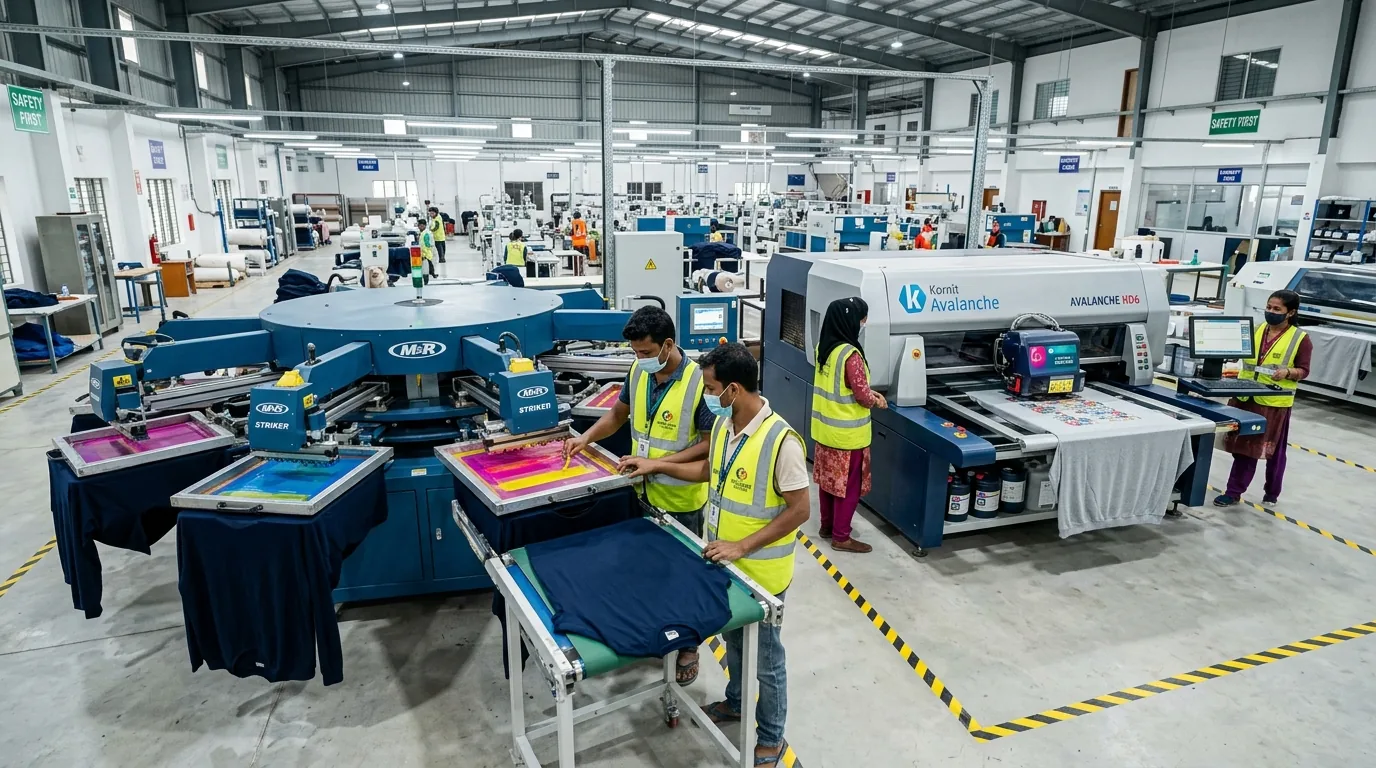
Embellishments represent your brand identity. In our printing and embroidery sections, every panel run is evaluated for design placement accuracy, color fidelity against Pantone references, ink curing completeness, and embroidery stitch registration.

  • Cure Temperature & Adhesion: Digital pyrometer verification of dryer tunnel heat; cross-hatch tape test for ink adhesion.
  • Stretch Cracking Test: Printed panels elongated to maximum fabric stretch to confirm zero ink cracking or peeling.
Automatic Screen Printing Division at Sabah
Printing Quality Control — Automatic screen printing stations with in-line flash curing and continuous color consistency audits.
06

Finishing Inspection (Steam Pressing, Trimming & Pull Tests)

Snap Pull Test ≥90N

In our finishing division, garments transition from raw assembled items into retail-ready presentation. Every piece is cleaned of thread ends, pressed on temperature-controlled steam vacuum buck presses, and subjected to hardware safety audits.

  • Snap & Button Pull Test: Calibrated electronic pull-gauge tests button and snap attachments with ≥90N (20 lbs) holding force for 10 seconds.
  • Thread Trimming: High-intensity task lighting tables where all loose or long thread tails (>2mm) are trimmed.
Finishing Steam Pressing and Thread Inspection
Finishing Inspection Floor — Vacuum steam pressing and 100% manual surface cleaning for pristine retail presentation.
07

Final Inspection (AQL 1.5 Major / 2.5 Minor Audit)

ISO 2859-1 Level II

Before a single carton is sealed for container dispatch, our independent Quality Assurance Department executes a statistical Final Random Inspection (FRI) in accordance with international standard ISO 2859-1 (ANSI/ASQ Z1.4) Normal Single Sampling Level II.

  • Statistical Random Sampling: Cartons drawn randomly across all sizes, colors, and production days.
  • Major Defect Threshold (AQL 1.5): Functional or prominent visual flaws evaluated against strict statistical acceptance limits.
Final Inspection and Staging Floor
Export Staging & Final Audit — Audited cartons staged under sealed conditions awaiting freight release authorization.
08

Packing Checks (100% Metal Detection & Carton Drop Test)

100% Hashima Metal Detection

The final gate ensures consumer safety and damage-free international logistics. Every individual garment must pass through continuous conveyor needle detectors, followed by barcode scan verification, moisture measurement, and ISTA-standard export carton drop testing.

  • 100% Dual-Head Metal Detection: Hashima conveyor detectors calibrated with 1.0mm-1.2mm ferrous test cards every 2 hours.
  • Barcode & Polybag Scan: Handheld laser scanners verify UPC/EAN retail barcodes match SKU, size, and color on packing lists.
Master Export Carton Packing and Metal Detection Bay
Packing & Needle Detection Bay — Sterilized packaging line with continuous conveyor needle detection and 5-ply carton strapping.
Standards

The AQL System Explained (ISO 2859-1 Level II)

Clear defect categorization and statistical acceptance limits

Critical Defects

Limit: 0 Allowed (100% Rejection)

Any condition that poses a safety hazard to the consumer or violates international import regulations. Zero tolerance threshold.

  • Broken needle or metal fragment inside garment
  • Mold, mildew, or insect contamination
  • Sharp edges, loose drawcord hazard on children's wear
  • Incorrect country of origin or fiber content label

Major Defects (AQL 1.5)

AQL 1.5 Standard

Defects that affect garment salability, structural function, or noticeable visual appearance. Triggers batch rejection if count exceeds limit.

  • Measurements outside approved POM tolerance range
  • Open seam, drop stitch, or major seam slippage
  • Visible fabric hole, run, or prominent color shading
  • Incomplete print cure, cracking, or skewed embroidery

Minor Defects (AQL 2.5)

AQL 2.5 Standard

Slight cosmetic flaws unlikely to reduce garment usability or customer return rate. Counted against general workmanship standard.

  • Removable surface lint, chalk marks, or light dust
  • Uncut thread tail between 3mm and 6mm
  • Minor label tilt within ±2mm tolerance
  • Slight shade variation within approved commercial range

ISO 2859-1 Level II Normal Single Sampling Table Example

Order Lot Size (Pcs) Sample Size Pulled AQL 1.5 Major (Accept / Reject) AQL 2.5 Minor (Accept / Reject) Inspection Action
501 to 1,200 80 pcs Accept ≤ 3 / Reject ≥ 4 Accept ≤ 5 / Reject ≥ 6 Full visual & measurement check
1,201 to 3,200 125 pcs Accept ≤ 5 / Reject ≥ 6 Accept ≤ 7 / Reject ≥ 8 Full visual & measurement check
3,201 to 10,000 200 pcs Accept ≤ 7 / Reject ≥ 8 Accept ≤ 10 / Reject ≥ 11 Full visual & measurement check
10,001 to 35,000 315 pcs Accept ≤ 10 / Reject ≥ 11 Accept ≤ 14 / Reject ≥ 15 Full visual & measurement check
Laboratory

In-House Physical & Chemical Testing Laboratory

Calibrated on-campus testing facility verifying mechanical and chemical standards

Color Fastness Testing

ISO 105-C06 / ISO 105-X12

Evaluates colorfastness to commercial laundering, wet/dry crocking rubbing, and acid/alkali perspiration testing under calibrated standard scales (Grade 4–5 target).

Dimensional Wash Stability

AATCC 135 / AATCC 150

Accelerated wash and tumble dry cycles measuring lengthwise, widthwise, and spirality torque distortion to confirm post-wash shrinkage stays within ±3% thresholds.

Snap & Button Pull Strength

ASTM D7142-05 (≥90N)

Electronic tensile pull tester confirms buttons, snaps, eyelets, and rivets withstand over 90 Newtons (20 lbs) continuous pulling force without detachment.

Lightbox Color Matching

VeriVide CAC 60 Lightbox

Eliminates metamerism by comparing lab dips and bulk dyeings under 5 standardized light sources: D65 (Daylight), TL84 (Marks & Spencer/Store), CWF, Incandescent A, and UV.

Partnerships

Open-Door Policy for Third-Party Inspection Agencies

Dedicated on-site facilities welcoming buyer-nominated audit agencies

Full Transparency for SGS, Intertek, Bureau Veritas & QIMA

Sabah Designers operates an open-door policy for all certified international inspection agencies appointed by buyers. We provide appointed inspectors with dedicated, climate-controlled inspection rooms, shadowless 1000-lux measuring tables, calibrated digital scales, pull gauges, and direct access to sealed factory packing lines.

SGS
Audits Welcomed
Intertek
Audits Welcomed
Bureau Veritas
Audits Welcomed
QIMA
Audits Welcomed
TÜV SÜD
Audits Welcomed

Certified Manufacturing & Social Compliance Infrastructure

Our quality assurance protocols operate within a certified manufacturing facility accredited under 12 major international bodies including Sedex SMETA, amfori BSCI, RSC Safety, GOTS, OEKO-TEX Standard 100, and Higg Index.

VIEW ALL 12 AUDITED CERTIFICATIONS ON FACTORY PORTAL

Quality Guaranteed

Partner With a Factory That Takes Process Control Seriously

Experience predictable garment manufacturing backed by independent quality oversight, in-line defect tracking, and certified export compliance. Contact our QA and merchandising directors today.